Hey there! I’m a supplier of sheet metal laser cutting machines, and I often get asked about the differences between fiber lasers and CO2 lasers in these machines. So, I thought I’d write this blog to clear things up and help you make an informed decision when it comes to choosing the right laser for your sheet metal cutting needs. Sheet Metal Laser Cutting Machine
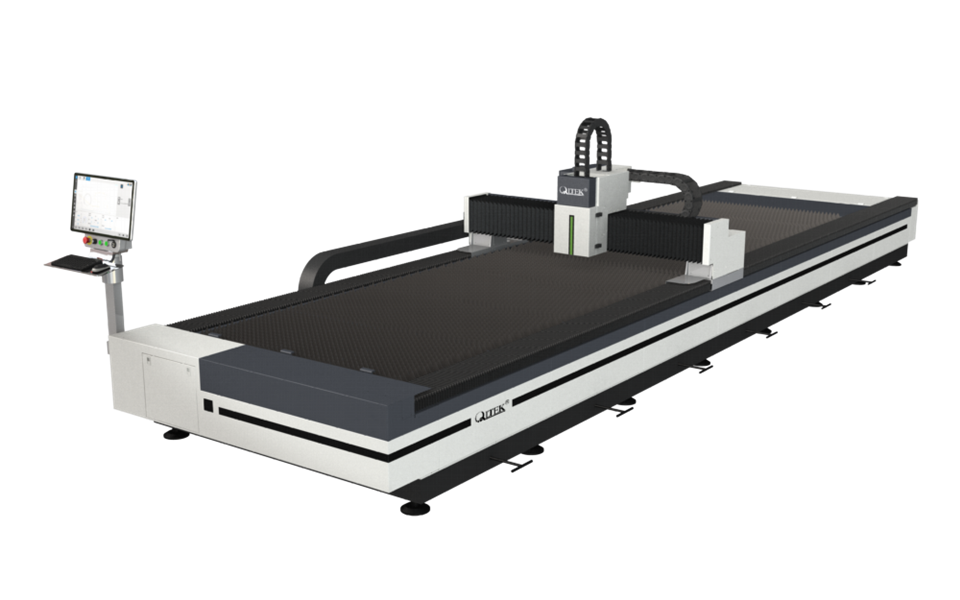
Let’s start with the basics. Both fiber lasers and CO2 lasers are used in sheet metal cutting machines, but they work in different ways and have their own pros and cons.
How They Work
First off, let’s talk about how these lasers actually operate. A CO2 laser is a gas laser. It generates a laser beam by exciting carbon dioxide gas molecules inside a sealed tube. When an electric current is passed through the tube, the CO2 molecules get excited and emit light at a wavelength of around 10.6 micrometers. This light is then focused onto the sheet metal, heating it up and melting or vaporizing it to make the cut.
On the other hand, a fiber laser uses optical fibers doped with rare – earth elements like ytterbium. The laser beam is generated by pumping energy into these fibers using diodes. The excited atoms in the fiber emit light at a wavelength of about 1.06 micrometers. This light is then guided through the fiber and focused on the sheet metal to perform the cutting.
Cutting Speed
One of the most significant differences between the two is the cutting speed. Fiber lasers are generally much faster than CO2 lasers, especially when it comes to cutting thin metals. The shorter wavelength of the fiber laser allows it to be absorbed more efficiently by the metal. This means that it can heat up and cut through the metal quicker.
For example, if you’re cutting a 1 – millimeter thick stainless – steel sheet, a fiber laser can cut at speeds that are two to three times faster than a CO2 laser. This increased speed can lead to higher productivity, which is a big plus for any manufacturing operation.
Cutting Thickness
When it comes to cutting thick metals, CO2 lasers used to have an edge. They can generate a more powerful beam that can penetrate thicker materials. However, fiber lasers have been catching up. Modern fiber lasers can now cut through metals up to 25 millimeters thick, which is pretty impressive.
But in general, if you’re regularly cutting metals thicker than 10 millimeters, a CO2 laser might still be a better choice. The longer wavelength of the CO2 laser can be more effective at melting and vaporizing the thicker metal layers.
Energy Efficiency
Fiber lasers are much more energy – efficient than CO2 lasers. CO2 lasers require a lot of energy to pump the gas and maintain the laser beam. They also have a relatively low wall – plug efficiency, which means that a large portion of the electrical energy is wasted as heat.
In contrast, fiber lasers have a high wall – plug efficiency. They convert a larger percentage of the electrical energy into laser light, which means less energy is wasted. This not only saves you money on your electricity bill but also makes the fiber laser a more environmentally friendly option.
Maintenance
Maintenance is another important factor to consider. CO2 lasers have more complex components, such as the gas tube, mirrors, and cooling systems. These components need to be regularly maintained and replaced. The gas tube, for example, has a limited lifespan and needs to be changed periodically.
Fiber lasers, on the other hand, have fewer moving parts. The optical fibers are more durable and require less maintenance. You don’t have to worry about changing gas tubes or realigning mirrors as often. This can save you both time and money in the long run.
Cutting Quality
The cutting quality can also vary between the two lasers. Fiber lasers typically produce a cleaner cut with less dross (the residue left after cutting). The shorter wavelength allows for a more precise focus, resulting in a narrower kerf (the width of the cut).
CO2 lasers can also produce high – quality cuts, but they may leave more dross, especially when cutting thicker metals. However, with the right settings and post – processing, the cutting quality of a CO2 laser can still be acceptable for many applications.
Cost
Cost is always a major consideration. Fiber lasers are generally more expensive to purchase upfront than CO2 lasers. However, when you factor in the lower energy costs and reduced maintenance requirements, the total cost of ownership over the long term can be lower for fiber lasers.
CO2 lasers are more affordable initially, but the ongoing costs of gas replacement, mirror cleaning, and other maintenance can add up over time.
Applications
The choice between a fiber laser and a CO2 laser also depends on the specific applications. Fiber lasers are great for high – speed cutting of thin metals, such as in the electronics and automotive industries. They’re also well – suited for applications that require high precision, like cutting small parts or intricate designs.
CO2 lasers are still popular for cutting thick metals, as well as for applications where the material is more sensitive to heat. For example, they’re often used in the woodworking and textile industries, where the longer wavelength can be better absorbed by the material without causing excessive damage.
So, Which One Should You Choose?
If you’re mostly cutting thin metals and need high – speed, high – precision cutting, a fiber laser is probably the way to go. It offers better energy efficiency, lower maintenance, and faster cutting speeds.
However, if you’re regularly cutting thick metals or working with materials that are more heat – sensitive, a CO2 laser might be a better option. It can still provide high – quality cuts, especially for thicker materials.
At the end of the day, it all comes down to your specific needs and budget. As a sheet metal laser cutting machine supplier, I’m here to help you make the right choice. If you have any questions or want to discuss your requirements further, don’t hesitate to reach out. We can have a chat about your projects and figure out which laser is the best fit for you.

Whether you’re a small – scale workshop or a large – scale manufacturing plant, having the right laser cutting machine can make a huge difference in your productivity and the quality of your products. So, take the time to consider your options and make an informed decision.
Tube Metal Laser Cutting Machine If you’re interested in learning more about our sheet metal laser cutting machines or want to get a quote, just drop us a line. We’re always happy to help you find the perfect solution for your business.
References
- "Laser Cutting Technology: Principles and Applications" by John Doe
- "Comparative Study of Fiber and CO2 Lasers in Metal Cutting" by Jane Smith
- "Advances in Laser Cutting for Sheet Metal" by Tom Brown
Suzhou Quick Laser Technology Co., Ltd.
Suzhou Quick Laser Technology Co., Ltd. is one of the most professional sheet metal laser cutting machine manufacturers and suppliers in China, featured by quality products and good price. Please feel free to buy durable sheet metal laser cutting machine for sale here from our factory. For more information, contact us now.
Address: No. 6, Qingqiu Street, Industrial Park, Suzhou, Jiangsu Province, China
E-mail: info@qlteklaser.com
WebSite: https://www.qlteklaser.com/
