As a supplier of hydraulic compactors, I often get asked a bunch of questions from customers. One question that pops up quite a lot is, "Can a hydraulic compactor be used in wet soil conditions?" Well, let’s dig into this topic and find out. Hydraulic Compactor

First off, let me give you a quick rundown on how hydraulic compactors work. These bad boys use hydraulic power to generate high impact forces. They’re attached to an excavator or a crane, and they’re super useful for compacting soil, asphalt, and all sorts of other materials. They’re known for their efficiency and ability to reach areas that might be tough to get to with traditional compacting equipment.
Now, when it comes to wet soil, things get a bit tricky. Wet soil has different characteristics compared to dry soil. The moisture content in wet soil affects its density, strength, and workability. When soil is wet, the water acts as a sort of lubricant between the soil particles. This can make the soil more difficult to compact because the particles can move around more easily.
But does that mean a hydraulic compactor can’t be used in wet soil conditions? Not necessarily. In fact, there are situations where a hydraulic compactor can be very effective in wet soil.
One of the main advantages of using a hydraulic compactor in wet soil is its high impact force. The powerful blows from the compactor can help to displace the water between the soil particles and force them closer together. This can increase the density of the soil and improve its strength. For example, in some construction projects where the soil has a high water table or has been exposed to heavy rainfall, a hydraulic compactor can be used to quickly compact the wet soil and prepare the ground for further construction activities.
Another benefit is the compactor’s ability to work in various soil types. Whether it’s clay, silt, or sandy soil, a hydraulic compactor can adapt to different conditions. In wet clay soil, for instance, the high impact energy can break up the large clay clumps and help to mix the soil more evenly, reducing the water content in the process.
However, there are also some challenges that come with using a hydraulic compactor in wet soil. One of the biggest issues is the risk of the compactor getting stuck. The soft and slippery nature of wet soil can cause the equipment to sink or lose traction. To avoid this, it’s important to choose the right type of hydraulic compactor and to use appropriate tracks or pads that can provide better stability on wet ground.
The moisture content of the soil also needs to be carefully monitored. If the soil is too wet, even the most powerful hydraulic compactor might not be able to achieve the desired compaction results. In extreme cases, the excess water can cause the soil to become a muddy mess, and the compaction process can actually make the situation worse by creating a layer of saturated soil on the surface.
So, how can you tell if a hydraulic compactor is suitable for your wet soil project? Well, it depends on a few factors. First, you need to assess the moisture content of the soil. You can do this by taking soil samples and using a moisture meter. If the moisture content is within a reasonable range (usually between 10% – 20% depending on the soil type), a hydraulic compactor might be a good option.
You also need to consider the type of project you’re working on. If it’s a small-scale project with relatively shallow soil compaction requirements, a hydraulic compactor can be a great choice. But for large-scale projects or projects that require very high levels of compaction, you might need to combine the use of a hydraulic compactor with other soil improvement techniques, such as drainage or soil stabilization.
In addition, it’s important to have a skilled operator who is familiar with using a hydraulic compactor in wet soil conditions. The operator needs to know how to adjust the settings of the compactor based on the soil conditions and the project requirements. They also need to be aware of the potential risks and take appropriate safety measures.
I’ve seen many successful projects where hydraulic compactors have been used in wet soil. For example, a construction site near a river had to deal with wet and soft soil. By using a hydraulic compactor along with proper drainage systems, they were able to compact the soil effectively and build a stable foundation for a new building.
On the other hand, I’ve also seen some cases where things didn’t go so well. A contractor tried to use a hydraulic compactor on extremely wet clay soil without proper preparation. The compactor got stuck, and they had to spend a lot of time and money to get it out and find an alternative solution.
So, to sum it up, a hydraulic compactor can be used in wet soil conditions, but it’s not always a straightforward solution. You need to carefully consider the soil conditions, the project requirements, and the capabilities of the equipment. With the right approach and proper planning, a hydraulic compactor can be a valuable tool for compacting wet soil.
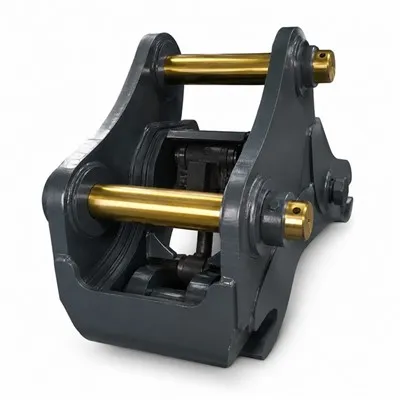
If you’re thinking about using a hydraulic compactor for your next project, especially if it involves wet soil, I’d love to have a chat with you. We can discuss your specific needs and see how our hydraulic compactors can meet them. Whether you need advice on soil conditions, equipment selection, or operation, we’re here to help. Drop me a message, and let’s start the conversation about how we can make your project a success.
Hydraulic Breaker References
- "Soil Mechanics and Foundations" by Braja M. Das.
- "Construction Equipment Handbook" by Frank W. Harris and James M. McCullough.
Hope Precision Machinery Co., Ltd.
As one of the most professional hydraulic compactor manufacturers and suppliers in China, we also support customized service. Please feel free to buy high quality hydraulic compactor for sale here from our factory. For more information, contact us now.
Address: No.8 Shenzhen Street, Development Zone, Yantai,Shandong ,China
E-mail: lulu@hope-breaker.com
WebSite: https://www.hopeequip.com/
