Hey there, folks! I’m working for a power transformer supplier, and I’ve been knee – deep in all things power transformers for a long time. Today, I wanna chat about something super important in the world of power transformers: the effect of short – circuit impedance. Power Transformer

Let’s start with the basics. Short – circuit impedance, often just called Z, is a big deal when it comes to power transformers. It’s a measure of how the transformer behaves when there’s a short – circuit in the electrical system. To put it simply, it shows how much the transformer resists the flow of short – circuit current.
One of the most obvious effects of short – circuit impedance is on short – circuit current. When there’s a short – circuit in the system, current can spike up like crazy. But the short – circuit impedance of the transformer acts as a kind of speed bump. A higher short – circuit impedance means less short – circuit current can flow. This is crucial because too much short – circuit current can damage the transformer and other electrical equipment in the system. For example, if a power transformer has a low impedance, during a short – circuit, the current could reach extremely high levels, causing overheating, mechanical stress, and even complete failure of the transformer. On the other hand, a transformer with a well – designed high impedance can limit the short – circuit current to a safe level.
Another effect is on the voltage regulation of the transformer. Voltage regulation is all about how well the transformer can keep the secondary voltage stable, even when the load on the system changes. Short – circuit impedance plays a huge role here. When the load increases, the voltage at the secondary side of the transformer tends to drop. The magnitude of this voltage drop depends on the short – circuit impedance. A higher short – circuit impedance leads to a larger voltage drop when the load changes. So, if you need a transformer that can maintain a more stable voltage under varying loads, you’ve gotta consider the short – circuit impedance carefully. We often have customers who are in industries where stable voltage is a must, like data centers or manufacturing plants, and they’re really particular about the short – circuit impedance of the transformers we supply.
Let’s talk about the mechanical aspects. The short – circuit impedance also affects the mechanical forces inside the transformer during a short – circuit. When a short – circuit occurs, the high current flowing through the transformer windings creates strong magnetic fields. These magnetic fields generate mechanical forces that can push and pull on the windings. With a low short – circuit impedance, the short – circuit current is higher, which means these mechanical forces are also stronger. Over time, these strong forces can cause the windings to shift, deform, or even break. This is a major concern for power transformer reliability. A high – quality transformer with an appropriate short – circuit impedance can withstand these mechanical forces better, ensuring a longer lifespan and fewer maintenance issues.
Now, choosing the right short – circuit impedance for a power transformer is no easy task. It’s a delicate balance. On one hand, you want to limit the short – circuit current, so a higher impedance is good. But on the other hand, you don’t want the voltage regulation to be too poor. It depends a lot on the specific application. For a distribution transformer used in a residential area, a different short – circuit impedance might be appropriate compared to a transformer used in a large industrial complex.
At our company, we’ve got a team of experts who are really good at figuring out the right short – circuit impedance for different customer needs. We take into account all the factors like the expected short – circuit level in the system, the load characteristics, and the required voltage stability. We start by having in – depth discussions with our customers. We want to know all about their electrical systems, what kind of loads they’re dealing with, and what their future expansion plans are. Based on this information, we can recommend the best power transformer with the optimal short – circuit impedance.
We’ve also got a great manufacturing process. We use high – quality materials and advanced techniques to make sure the transformers we produce have the exact short – circuit impedance we aim for. During the production, we perform a bunch of tests. We check the electrical properties, measure the short – circuit impedance accurately, and make sure that the transformer can handle the expected short – circuit currents and mechanical stresses.
And speaking of our customers, we’ve had some great success stories. There was this one customer, a medium – sized manufacturing company. They were having problems with voltage fluctuations and were worried about the risk of short – circuit damage to their equipment. When they came to us, our team analyzed their electrical system in detail. We found out that the short – circuit impedance of their existing transformer was too low for their load requirements. So, we designed and supplied them with a brand – new transformer with a more appropriate short – circuit impedance. After the installation, they saw a significant improvement in voltage stability, and they no longer had to worry as much about short – circuit damage. They were really happy with the solution we provided.
If you’re in the market for a power transformer, understanding the effect of short – circuit impedance is super important. It can have a huge impact on the performance, reliability, and safety of your electrical system. And if you need any help with choosing the right transformer with the right short – circuit impedance, we’re here for you. Our team of experts is always ready to have a chat with you, answer your questions, and come up with the best solution for your specific situation. Whether you’re a small business owner looking for a simple distribution transformer or a large industrial company in need of a high – capacity power transformer, we’ve got you covered.
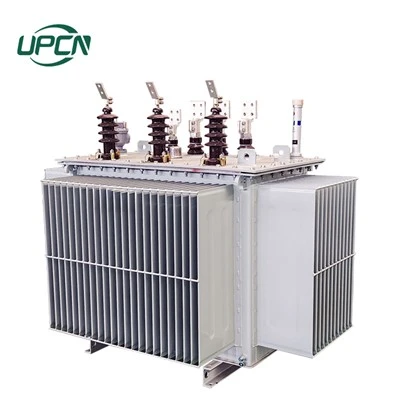
So, don’t hesitate to reach out to us if you’re thinking about a new power transformer purchase. Let’s have a conversation and see how we can help you get the most out of your electrical system with the right power transformer.
Power Transformer References:
- “Power Transformer Engineering: Design and Application” by James H. Harlow
- “Transformer Handbook: Transformer Design and Application” by Colin M. Butterworth – Heak
- IEEE Standard C57.12.00 – 2010, Standard General Requirements for Liquid – Immersed Distribution, Power, and Regulating Transformers
Henan Union Power Construction Group Co., Ltd.
As one of the most professional power transformer manufacturers and suppliers in China, we have world-leading production equipment and strong manufacturing capabilities. Please rest assured to buy customized power transformer at competitive price from our factory.
Address: 701, Unit 1, Building 23, Phase II, Jindai Smart Industry Park, No. 17 Wenzhi Road,Guancheng Hui District, Zhengzhou City, Henan Province, P. R. China
E-mail: unionpower66@gmail.com
WebSite: https://www.unionpowertransformer.com/
