Hey there! I’m a supplier of fully automatic production lines, and I’ve seen firsthand how important it is to have the right diagnostic tools for these high – tech setups. In this blog, I’m gonna share with you some of the top diagnostic tools that are essential for a fully automatic production line. Fully Automatic Production Line
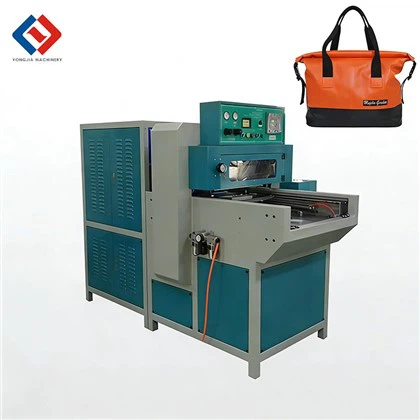
Let’s kick things off by understanding why we even need diagnostic tools in the first place. A fully automatic production line is a complex system with multiple components working in harmony. Any small glitch or malfunction in one part can quickly snowball into a major production halt, leading to lost time and revenue. Diagnostic tools help us catch these issues early, so we can fix them before they cause too much damage.
1. Sensors
Sensors are like the eyes and ears of a fully automatic production line. They’re everywhere, constantly monitoring different aspects of the production process. For example, proximity sensors can detect when an object is getting close to a certain point on the line. This is super useful for tasks like pick – and – place operations, where the robot arm needs to know exactly when to grab an item.
There are also temperature sensors. In a production line, some processes generate a lot of heat, and if the temperature gets too high, it can damage the equipment or affect the quality of the products. Temperature sensors keep track of these heat levels and send alerts if things start to get too toasty.
Another type is the pressure sensor. In manufacturing processes that involve fluids or gases, maintaining the right pressure is crucial. Pressure sensors can detect any fluctuations and let us know if there’s a problem with the pumps, valves, or other pressure – related components.
2. Programmable Logic Controllers (PLCs)
PLCs are the brains of the operation. They’re like little computers that control and monitor the different parts of the production line. These controllers are programmed to execute specific tasks based on input from sensors and other devices.
One of the great things about PLCs is that they can store data about the production process. This data can be analyzed later to identify patterns and potential issues. For example, if a certain machine keeps shutting down at a particular time during the production cycle, the PLC data can help us figure out what’s going on.
PLCs also allow for remote monitoring and control. You don’t always have to be on the factory floor to manage the production line. With the right software, you can access the PLC from anywhere and make adjustments as needed. This is especially handy in today’s world, where many of us are working remotely or need to manage multiple production sites.
3. Vibration Analysis Tools
Vibration is a common problem in machinery, and it can be a sign of underlying issues. Vibration analysis tools are used to measure and analyze the vibrations of different components on the production line.
These tools can detect things like unbalanced rotors, loose parts, or worn – out bearings. By analyzing the frequency and amplitude of the vibrations, we can determine the severity of the problem and take appropriate action. For example, if a vibration analysis shows that a bearing is starting to wear out, we can schedule maintenance before it fails completely and causes a production shutdown.
Some vibration analysis tools are portable, which means they can be easily moved around the production line to check different machines. Others are permanently installed on key pieces of equipment for continuous monitoring.
4. Infrared Thermography Cameras
Infrared thermography cameras are really cool (pun intended). They work by detecting the infrared radiation emitted by objects, which is related to their temperature. These cameras can quickly identify hot spots on the production line, which could indicate overheating components.
For example, electrical connectors that are overheating can be a fire hazard. With an infrared thermography camera, we can spot these hot spots from a distance and take steps to fix the problem, such as tightening loose connections or replacing faulty components.
Infrared thermography can also be used to check the insulation of pipes and other equipment. If there’s a problem with the insulation, heat can escape, which not only wastes energy but can also affect the performance of the production line.
5. Data Loggers
Data loggers are used to collect and store data from various sensors and devices on the production line. They can record data over a long period of time, which is useful for trend analysis.
For example, a data logger can collect data on the speed of a conveyor belt, the temperature of a furnace, or the pressure in a hydraulic system. By analyzing this data over time, we can identify trends such as gradual changes in performance or recurring issues.
Data loggers can be set to record data at regular intervals or when certain events occur. They’re also often equipped with communication interfaces, which allow the data to be transferred to a computer or a cloud – based system for further analysis.
6. Ultrasound Testing Equipment
Ultrasound testing equipment uses high – frequency sound waves to detect flaws in materials and components. In a fully automatic production line, it can be used to check the integrity of welds, pipes, and other critical parts.
When an ultrasound wave encounters a flaw, such as a crack or a void, it reflects back in a different way than it would from a solid, intact material. By analyzing these reflections, we can determine the size, location, and severity of the flaw.
This is important because a small flaw in a component can grow over time and eventually lead to failure. By detecting these flaws early, we can prevent costly breakdowns and ensure the safety of the production line.
7. Network Diagnostic Tools
In today’s connected world, most fully automatic production lines rely on networks to communicate between different components and systems. Network diagnostic tools are used to monitor and troubleshoot these networks.
These tools can detect issues such as network congestion, slow data transfer speeds, or faulty network cables. They can also help identify security vulnerabilities, which are crucial to protect the production line from cyber – attacks.
Some network diagnostic tools can be used to monitor the performance of industrial protocols, such as Modbus or Profibus. By analyzing the network traffic, we can ensure that the communication between different devices is smooth and reliable.
The Bottom Line
Having the right diagnostic tools for a fully automatic production line is essential for keeping things running smoothly. From sensors to network diagnostic tools, each one plays a crucial role in detecting and preventing issues before they become major problems.

If you’re in the market for a fully automatic production line or need to upgrade your existing diagnostic tools, I’d love to have a chat. We can talk about your specific needs, and I can help you find the best solutions for your production process. Don’t let production issues slow you down. Reach out, and let’s work together to optimize your production line.
Blister Packaging Machine References
- "Industrial Automation Handbook"
- "Maintenance and Diagnostic Strategies for Manufacturing Equipment"
- "Handbook of Sensors and Actuators in Mechatronics"
Dongguan Yongjia Machinery Equipment Co., Ltd.
We are one of the most reliable fully automatic production line manufacturers and suppliers in China, specialized in providing high quality customized service. Please feel free to wholesale advanced fully automatic production line at low price from our factory. For quotation, contact us now.
Address: No. 240, Chashan South Road, Chashan Town, Dongguan City, Guangdong Province, China
E-mail: info@yjwelding.com
WebSite: https://www.yjhighfrequencymachine.com/
