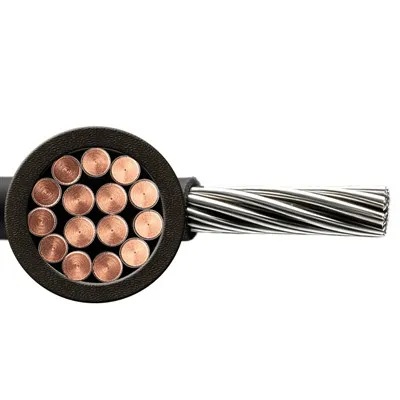
As a supplier of RF coaxial cables, I often encounter inquiries about the bandwidth of these essential components in the realm of radio frequency (RF) technology. Bandwidth is a critical parameter that determines the performance and suitability of RF coaxial cables for various applications. In this blog, I will delve into the concept of RF coaxial cable bandwidth, its significance, influencing factors, and how it relates to different use – cases. RF Coaxial Cable
Understanding Bandwidth in RF Coaxial Cables
Bandwidth is defined as the range of frequencies over which a RF coaxial cable can effectively transmit signals with acceptable levels of attenuation, signal loss, and distortion. It is measured in Hertz (Hz) and represents the difference between the highest and the lowest frequencies that can be accommodated.
In a more practical sense, think of bandwidth as a highway for data. A wider bandwidth allows more "lanes" for different frequencies to travel simultaneously. If we compare the transmission of data through a coaxial cable to a traffic flow on a highway, a narrow – bandwidth cable would be like a two – lane road with limited capacity for cars (signals) to move through. In contrast, a high – bandwidth cable acts as a multi – lane expressway, enabling the smooth passage of a larger volume of data at higher speeds.
Importance of Bandwidth in RF Applications
Bandwidth is of utmost importance in RF applications because it directly impacts the data – carrying capacity and the overall quality of signal transmission.
-
Communication Systems: In modern communication systems such as wireless networks, satellite communications, and cellular networks, high – bandwidth RF coaxial cables are required to transmit a large amount of data. For example, 5G networks demand cables with sufficient bandwidth to handle the high – frequency signals and massive data transfer rates associated with the new technology. Without adequate bandwidth, the signal can become congested, leading to slow data speeds, dropped calls, and poor network performance.
-
Broadcast and Multimedia: In the broadcast industry, where high – definition video and audio signals are transmitted, wide – bandwidth coaxial cables are essential. HD and 4K video require a significant amount of data to be transferred in real – time. A cable with insufficient bandwidth may result in pixelation, video freezes, or audio glitches, degrading the viewing experience for the audience.
-
Test and Measurement: In test and measurement applications, precise signal transmission is crucial. Engineers rely on RF coaxial cables with well – defined and wide bandwidths to accurately measure and analyze RF signals. Cables with inadequate bandwidth can introduce measurement errors, leading to inaccurate results and potentially flawed design decisions.
Factors Affecting the Bandwidth of RF Coaxial Cables
Several factors influence the bandwidth of RF coaxial cables. Understanding these factors can help in selecting the appropriate cable for a given application.
Cable Construction
- Dielectric Material: The dielectric material used between the inner conductor and the outer conductor of the coaxial cable plays a significant role in determining the bandwidth. Dielectric materials with low loss and stable electrical properties, such as polytetrafluoroethylene (PTFE), are commonly used in high – bandwidth cables. These materials minimize signal attenuation and distortion, allowing for higher – frequency signals to be transmitted effectively.
- Conductor Quality: The quality of the inner and outer conductors also affects the bandwidth. Higher – quality conductors with lower resistance reduce signal loss. For example, cables with copper conductors generally offer better performance compared to those with aluminum conductors, especially at higher frequencies.
- Shielding Effectiveness: The shielding of the coaxial cable prevents electromagnetic interference (EMI) from affecting the signal. A well – shielded cable can maintain a higher signal – to – noise ratio, which is crucial for high – bandwidth applications. Multiple layers of shielding or the use of high – quality shielding materials can enhance the shielding effectiveness and, consequently, the bandwidth of the cable.
Cable Geometry
- Diameter: The diameter of the coaxial cable can influence its bandwidth. In general, larger – diameter cables offer lower attenuation and higher bandwidth compared to smaller – diameter cables. This is because larger conductors have lower resistance, and the dielectric can be optimally designed for better performance.
- Aspect Ratio: The ratio of the outer conductor diameter to the inner conductor diameter affects the characteristic impedance and the bandwidth of the cable. A carefully designed aspect ratio ensures that the cable has a consistent impedance over a wide range of frequencies, which is essential for efficient signal transmission.
Operating Conditions
- Temperature: Temperature can have a significant impact on the bandwidth of RF coaxial cables. As the temperature increases, the electrical properties of the cable materials change, which can lead to increased attenuation and reduced bandwidth. Therefore, in applications where the cable is exposed to extreme temperatures, it is essential to select a cable with temperature – compensated design.
- Flexing and Bending: Excessive flexing or bending of the coaxial cable can cause physical damage to the cable structure, affecting its electrical properties. Bends can introduce impedance mismatches and increase signal loss, reducing the effective bandwidth of the cable.
Measuring the Bandwidth of RF Coaxial Cables
Measuring the bandwidth of RF coaxial cables is a complex process that typically involves specialized test equipment. One common method is to use a vector network analyzer (VNA). The VNA can measure the scattering parameters (S – parameters) of the cable over a wide range of frequencies. From these S – parameters, important characteristics such as insertion loss, return loss, and characteristic impedance can be determined.
The bandwidth is then defined as the frequency range over which the insertion loss and return loss meet the specified criteria. For example, a cable may be considered to have a bandwidth of 1 GHz to 10 GHz if its insertion loss is less than a certain dB value (e.g., 3 dB) and the return loss is greater than a specified dB value (e.g., 10 dB) within this frequency range.
Selecting the Right RF Coaxial Cable Based on Bandwidth
When selecting an RF coaxial cable based on bandwidth requirements, it is important to consider the specific application. Here are some general guidelines:
- Low – Bandwidth Applications: For applications with low – frequency signals and relatively low data transfer requirements, such as basic radio communication systems operating at frequencies below 100 MHz, a standard coaxial cable with a moderate bandwidth may be sufficient. These cables are often more cost – effective and easier to install.
- Medium – Bandwidth Applications: Applications like Wi – Fi networks, which typically operate in the 2.4 GHz and 5 GHz frequency bands, require cables with medium to high bandwidth. Choosing a cable with a bandwidth that extends beyond the operating frequencies of the network can ensure stable and reliable performance.
- High – Bandwidth Applications: In high – end applications such as 5G base stations, satellite communication systems, and high – definition video transmission, cables with extremely wide bandwidths are necessary. These cables are often more expensive and may require specialized installation techniques, but they are essential for achieving the required performance.
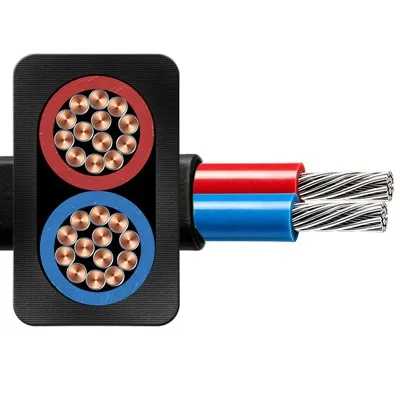
As a reliable supplier of RF coaxial cables, we offer a wide range of products with different bandwidth capabilities to meet the diverse needs of our customers. Whether you are working on a small – scale project or a large – scale infrastructure deployment, our team of experts can help you select the most suitable cable for your application.
Cable Assemblies & Accessories If you are in the market for RF coaxial cables and need to find the perfect solution for your bandwidth requirements, we invite you to contact us for a procurement discussion. Our sales representatives are ready to provide you with detailed product information, technical support, and competitive pricing. Let us work together to ensure the success of your RF projects.
References
- "RF and Microwave Coupling Circuits" by David M. Pozar.
- "High – Frequency Electronic Circuits: Analysis and Design" by R. Ramakrishna Rao.
- Industry reports on RF coaxial cable technology and applications.
Yangzhou Huayu Cable Co., Ltd.
Yangzhou Huayu Cable Co., Ltd. is one of the most professional rf coaxial cable manufacturers and suppliers in China, also supports customized service with low price. Please feel free to wholesale advanced rf coaxial cable made in China here from our factory. Contact us for pricelist.
Address: No. 9 Jingang Road, Yangzhou City, Jiangsu Province, China
E-mail: huayucableco@126.com
WebSite: https://www.huayucabletech.com/
